By Antonio Garcia Jan 29, 2026 10 min
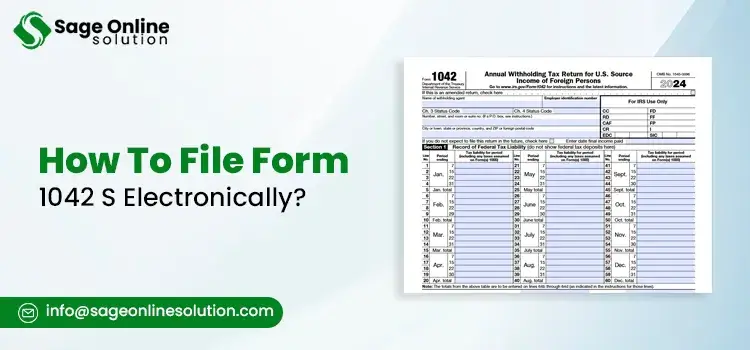
The 1042 Tax Form is one of the most critical IRS reporting documents for U.S. individuals and businesses that make payments to foreign persons. Yet, it is also one of the most misunderstood. If you have ever had multiple questions like what is 1042 tax form, what is a 1042 form, or what is IRS form 1042, you are not alone.
This form sustains a critical aspect in reporting U.S. source income that is paid to non-resident aliens and foreign entities, along with the federal tax withheld on those payments. With IRS enforcement tightening and updated compliance expectations for the 2025–2026 tax cycle, understanding this form is no longer optional. And in this article, you’ll know all about this tax form and the details that you’ll need to take care of for the latest tax slab cycle.
For professional help to fill out the 1042 Tax Form, ensure accurate withholding, and avoid costly penalties, contact our experts today by dialling +1-844-341-4437.
The 1042 Tax Form is an annual IRS withholding tax return that is used to report the U.S. source income that is paid to any foreign entity and the federal income tax that is withheld on those particular payments. In easy terms, it tells the IRS how much income a withholding agent based in the U.S. has paid to non-resident aliens or foreign entities and how much tax was withheld and deposited during the year.
If you’re still wondering about questions like what is a 1042 tax form or what is 1042 form, the simple answer starts with one key concept, and that is withholding responsibility. The IRS requires U.S. individuals, businesses, and organizations that make certain payments to foreign persons to withhold tax at the source, generally at a 30 percent rate, unless a tax treaty or exemption applies. The 1042 Tax Form is the official return that summarizes those withholding activities for the entire calendar year.
Many people ask what is form 1042 for and what is IRS form 1042 used for because they confuse it with other information returns. Form 1042 is not filed by the foreign recipient of income. Instead, it is filed by the withholding agent. Again, its primary purpose is to:
In other words, the 1042 Tax Form acts as a summary return, while Form 1042-S provides recipient-level details.
If you are asking what is a form 1042 and who actually deals with it, the list is broader than most people expect. The form applies to:
Anyone that meets the IRS definition of a withholding agent may be required to file the 1042 Tax Form, even if the income was exempt or reduced by a tax treaty.
1.3 Applicable Tax Years And Rules (2025–2026)
The 1042 Tax Form follows calendar year reporting format and reflects IRS rules under the most recent tax cycle. For the 2025–2026 filing season, the form still continues to operate under Internal Revenue Code Chapters 3 and 4, including the FATCA related reporting. While the withholding rates still remain largely unchanged, the IRS has increased its focus on accuracy, electronic filing compliance, and proper linkage between Form 1042 and Form 1042-S.
Crucially, for the 2025 tax year (filed in 2026), the electronic filing threshold has been lowered significantly. Most withholding agents are now required to file Form 1042 electronically if they find that they are required to file 10 or more information returns (aggregated across various forms like 1042-S, 1099, etc.) during the calendar year.
The One Big Beautiful Bill (OBBB) Act of 2025 has reinforced IRS enforcement capabilities. While it introduces new deductions for domestic workers (like the ‘No Tax on Tips’ provision), it has also increased the IRS budget for document matching, making the reconciliation between Form 1042 and 1042-S more critical than ever.
1.4 Form 1042 At A Glance
| Category | Description |
|---|---|
| Official name | Annual Withholding Tax Return for U.S. Source Income of Foreign Persons |
| Filed by | U.S. withholding agents |
| Reports | Income paid combined with federal tax withheld |
| Related forms | Form 1042-S, Form 1042-T for paper filers only and Form 7004 for extensions |
| IRS authority | IRC Chapters 3 and 4 |
| Filing basis | Calendar year |
Understanding what is 1042 tax form and what is IRS form 1042 is the foundation for full compliance. Errors at this stage often lead to mismatched filings, IRS notices, and penalties later.
Understanding who must file Form 1042 is one of the most important compliance steps when dealing with U.S. source income paid to foreign persons. The IRS places the filing obligation on the withholding agent, not on the foreign recipient. This distinction often causes confusion and leads many taxpayers to incorrectly assume that only large corporations are responsible. In reality, the filing requirement is much broader.
If you have ever asked who needs to file Form 1042, who files Form 1042, or what is a 1042 tax form used for, the answer comes down to whether you control, receive, custody, dispose of, or pay certain types of U.S.-source income to a foreign person.
2.1 Who Exactly Is A Withholding Agent?
For IRS purposes, a withholding agent is any person or entity, U.S. or foreign, that has control over the payment of income subject to withholding. This includes individuals, businesses, partnerships, corporations, trusts, estates, and even non-profit organizations.
This also includes Publicly Traded Partnerships (PTPs) or nominees that are required to withhold tax under the Section 1446 on distributions of effectively connected income.
The 10% withholding on the ‘Amount Realized’ for PTP transfers is now a high-priority audit area for the IRS in 2026. Ensure you are using Income Code 58 specifically for these transactions.
If you fall under the responsibility for withholding or should have withheld tax under IRS rules, you are required to file the 1042 Tax Form, even if:
2.2 Common Situations That Trigger Form 1042 Filing
You must file the 1042 Tax Form if you paid U.S. source income to any of the following:
This applies regardless of whether the payment was made in cash, electronically, or as a non-cash benefit.
The table below provides a clear, IRS-aligned overview of who must file Form 1042 and why the filing obligation applies.
| Type Of Withholding Agent | Example | Why Is Form 1042 Required? |
|---|---|---|
| U.S. business entity | Company paying a foreign consultant | Paid U.S.-source service income |
| Individual taxpayer | Person hiring a foreign independent contractor | Controlled payment subject to withholding |
| Financial institution | Bank paying interest to foreign account holder | Reportable investment income |
| University or college | School awarding scholarships to international students | Taxable portion of scholarship income |
| Partnership or LLC | Pass-through entity paying foreign partners | FDAP income distribution |
| Corporation | U.S. corporation paying foreign shareholders | Dividend payments |
| Non-profit organization | NGO paying stipends to foreign researchers | U.S. – source compensation |
| Payroll department | Employer with non-resident alien employees | Wage withholding obligations |
| Foreign entity with U.S. presence | Foreign company making U.S.-source payments | IRS withholding responsibility applies |
| Brokers/Transferees | Entity purchasing a PTP interest | To report 10% withholding on the amount realized under Section 1446(f) |
If you fall into any of these categories, you are considered as a withholding agent and you must file Form 1042, even if you believe no tax was due.
2.4 Key IRS Rule Many People Miss
One of the most overlooked IRS rules is that Form 1042 must be filed even if zero tax was withheld. If income was reportable on a 1042-S form, the summary return, the 1042 Tax Form, is still required. This is a common reason taxpayers receive IRS notices and penalty letters.
2.5 Relationship Between Filing And Reporting
If you issue one or more than one Form 1042-S documents, you automatically trigger the requirement to file the 1042 Tax Form. The IRS cross checks both forms, and mismatches are a frequent cause of audits and compliance reviews.
Starting in 2026, the IRS is transitioning electronic filing from the legacy FIRE system to the Information Returns Intake System (IRIS). Withholding agents must ensure they are registered for the correct system to avoid late-filing penalties.
For professional help to fill out the 1042 Tax Form, determine whether you qualify as a withholding agent, or avoid filing errors that lead to penalties, contact our experts today by dialling +1-844-341-4437
One of the most searched and misunderstood areas of the 1042 Tax Form is the type of income that must be reported. Many withholding agents incorrectly assume that only wages are involved, but the IRS rules are far broader. If you are asking what types of income are reported on Form 1042, the answer centers on U.S.-source income paid to foreign persons that is subject to withholding under IRS Chapters 3 and 4.
In general, the 1042 Tax Form reports income that is classified as FDAP income. FDAP stands for Fixed, Determinable, Annual, or Periodical income. This category covers almost all of the passive and recurring income paid from U.S. sources to any of the non-resident aliens and foreign entities.
The following income types are commonly required to be reported on the 1042 Tax Form, even if the withholding rate is reduced or eliminated by a tax treaty:
The OBBB Act also clarified that certain Trump Account distributions for foreign beneficiaries may be reportable, and it significantly increased the reporting threshold for 1099s to $2,000 however, note that the threshold for 1042-S reporting remains at $0. Any amount of U.S. source income paid to a foreign person must still be reported.
If the income is from a U.S. source and then is paid to a foreign person, it is reportable under this tax form, which fortifies the queries like what is Form 1042 used for in practical compliance.
3.2 A Tabular Structure For Income Types And Withholding Rules (2025–2026)
The table below highlights the common income categories and their typical withholding rates, and how they are supposed to be reported.
| Type Of Income | Reportable On Form 1042 | Standard Withholding Rate | Notes |
|---|---|---|---|
| Interest (U.S. source) | Yes | 30% | May be reduced by tax treaty |
| Dividends | Yes | 30% | Paid by U.S. corporations |
| Royalties | Yes | 30% | Covers patents, trademarks, copyrights |
| Independent services | Yes | 30% | Based on where services are performed |
| Rents | Yes | 30% | Includes real estate income |
| Gambling winnings | Yes | 30% | Certain winnings subject to exceptions |
| Scholarships (taxable portion) | Yes | 14% or 30% | Depends on income type |
| Prizes and awards | Yes | 30% | If U.S.-source |
| Substitute dividends | Yes | 30% | Securities lending arrangements |
| PTP Distributions | Yes | 37% (Non-Corp) | Reported under Code 27 or 57 |
| PTP Amount Realized | Yes | 10% | Section 1446(f) withholding; use Code 58 |
| Consent Fees | Yes | 30% | New for 2025, use Code 59 |
| Settlement Payments | Yes | 30% | New for 2025, use Code 61 |
This table highlights what types of income are reported on Form 1042 and how withholding applies under current IRS guidance.
3.3 Income That Is Still Reported Even If Tax Is Reduced
A critical compliance rule many overlook is that income must still be reported on the 1042 Tax Form even if:
In these cases, the income is still disclosed, and the reduced rate or exemption is reflected using the appropriate income and exemption codes on Form 1042-S.
Each income payment reported on the 1042 Tax Form must tie back to one or more 1042-S forms. The IRS uses this linkage to verify accuracy. If there is any mismatch between income totals or withholding amounts, that then is a very common trigger for IRS notices.
Having knowledge about what types of income are reported on Form 1042 is very needful for avoiding penalties and maintaining compliance in the 2025–2026 tax cycle.
For the tax year 2025, that is for filing in 2026, as previously mentioned if you are needed to file 10 or more information returns in total (including 1042-S, 1099, and W-2), you have to file Form 1042-S electronically via the IRS IRIS or FIRE systems. Failure to do so will result in the forms being treated as ‘not filed,’ leading to significant penalties.
For professional help to fill out the Tax Form, determine whether a specific income type is reportable, or apply the correct withholding rate, contact our experts by dialling +1-844-341-4437.
This probably is the most important section of this article, because to fully understand the 1042 Tax Form, you must clearly understand Form 1042-S and what 1042-S Form is used for. These two forms are inseparable. In fact, most IRS compliance issues related to the 1042 Tax Form stem from errors, omissions, or mismatches involving Form 1042-S. This is why taxpayers, payroll teams, and financial institutions frequently ask what is form 1042 S, what is 1042 S form, and what is 1042-S tax form, which then again are the same questions repeated but it’s just the amount of confusion this section creates.
Form 1042-S is an information return, not a tax return. It reports detailed, recipient-level information about U.S.-source income paid to foreign persons. While the 1042 Tax Form summarizes totals for the year, Form 1042-S breaks those totals down payment by payment and recipient by recipient.
If you are asking what is 1042-S form, or what is IRS form 1042-S, the IRS definition is very specific. Form 1042-S is a form that is used to report:
The form is issued by the withholding agent to a foreign recipient and has to be filed with the IRS. Every Form 1042-S that is filed must reconcile with the totals reported on the 1042 Tax Form.
Many compliance questions revolve around what form 1042-S used for. The answer to the question “what is a 1042-S form used for?” is that its primary purpose is to give the IRS and the foreign payee a crystal clear record of income and withholding. Specifically, Form 1042-S is used to:
This explains what is 1042 S form used for and what is form 1042-S for in real-world tax compliance.
The IRS treats the 1042 Tax Form as a summary document and Form 1042-S as the supporting detail. If you issue even one Form 1042-S, you are required to file the 1042 Tax Form. The IRS cross checks both forms electronically.
| Feature | Form 1042 | Form 1042-S |
|---|---|---|
| Purpose | Annual summary return | Recipient-level information return |
| Filed by | Withholding agent | Withholding agent |
| Reports | Total income and tax withheld | Individual payments and withholding |
| Issued to payee | No | Yes |
| IRS matching | Matches to 1042-S totals | Matches to Form 1042 |
| Filing frequency | Once per year per withholding agent | One per recipient per income type |
Form 1042-S must be provided to:
The recipient uses the form to support their own U.S. tax filing obligations. This is one of the reasons why the IRS places heavy emphasis on accuracy when issuing 1042-S forms.
The common situations where Form 1042-S is issued for are:
Each of these payments must also be reflected on the 1042 Tax Form, reinforcing how closely the two forms are connected.
The most commonly known IRS compliance failures occurs when:
Note: Under the OBBB Act’s ‘Modernizing Payments’ initiative, the IRS is phasing out paper checks. Withholding agents should ensure they use the new Direct Deposit fields on Form 1042 to receive any overpayment refunds faster and comply with the new digital-first mandate.
These issues often lead to IRS notices, penalties, and extended correspondence. Understanding what is a 1042-S tax form and using it correctly is essential for avoiding these outcomes.
4.7 New for 2026: The Box 7d Checkbox
The IRS has added Box 7d to the 2025/2026 version of Form 1042-S. This checkbox is used by Qualified Intermediaries (QI) and partnerships to indicate they are revising reporting for a specific recipient. Using this correctly is vital to ensuring the IRS matches the correction to the original 1042 summary return.
For professional help to fill out the 1042 Tax Form, prepare accurate 1042-S forms, or ensure both forms reconcile correctly, contact our experts by dialling +1-844-341-4437.
This section focuses strictly on IRS Form 1042-S instructions and how to fill out 1042-S Form correctly, based on current IRS instructions for the 2025–2026 tax cycle. To avoid any not so needed repetition, the explanation below assumes you already understand what the form is and how it connects to the 1042 Tax Form. The goal here is execution for Form 1042 S instructions, accuracy, and IRS compliance.
Form 1042-S must be completed per recipient and per income type. One recipient may receive multiple 1042-S forms if different income categories or withholding rates apply.
5.1.1 Income Information (Boxes 1–6)
These boxes are there to identify what was paid and how it is classified.
The IRS has introduced Income Codes 59 (Consent Fees), 60 (Loan Syndication Fees), and 61 (Settlement Payments). Under the OBBBA’s transition relief, these remain optional for 2025, but using them now ensures your systems are ready for the mandatory 2026 cycle.
Be sure to remember that the incorrect income codes are a leading cause of IRS mismatches.
5.1.2 Withholding Details (Boxes 7–10)
These fields explain why a specific withholding rate was applied.
Leaving these boxes blank when claiming treaty benefits is a common compliance failure.
5.1.3 Recipient Information (Boxes 11–13)
Utmost accuracy here is the most critical aspect.
Note: For the 2025–2026 cycle, ‘US’ is now a valid country code in Box 13b specifically for PTP distributions under Section 1446.
Missing or invalid TINs often trigger IRS penalty notices.
5.1.4 Payer Information (Boxes 14–18)
This section identifies the withholding agent. Every original 1042-S must now have a unique 10-digit number. If you amend the form later, you must use the same UFI to help the IRS link the correction.
5.2 Filing Methods And Requirements Of The Format
For the slab 2025–2026:
Electronic filing is now done through the IRIS (Information Returns Intake System) and FIRE systems. For 2026, the IRS has a ’10 form threshold’, if you file 10 or more returns (e.g., one for 1042-S and nine for 1099s), you must file it electronically.
All of the electronic submissions must pass the IRS format validation. The files that are rejected, be it because of any reason, are considered as not filed.
5.3 Common Preparation Errors To Avoid
| Error | Why Does It Causes Problems? |
|---|---|
| Incorrect income code | IRS mismatch with Form 1042 totals |
| Missing exemption code | Treaty benefit disallowed |
| Wrong country code | Treaty invalidation |
| Inconsistent totals | Automatic IRS notice |
| Late recipient copy | Separate penalty applies |
5.4 Some Of The Best Practices To Consider For Error free Filing
Even small errors can delay processing or trigger penalties.
For professional help to fill out the 1042 Tax Form, prepare accurate 1042-S filings, or ensure IRS acceptance on the first submission, contact our experts by dialling +1-844-341-4437.
In this section you’ll be reading about basic instructions that’ll explain how to complete IRS Form 1042 itself, based strictly on official IRS instructions for the 2025–2026 tax cycle.
Form 1042 is an annual reconciliation return. The IRS uses it to verify that total income paid and total federal tax withheld match the combined data submitted through all related Form 1042-S filings and tax deposits.
Form 1042 is organized to move from identification, to income reporting, to tax reconciliation, and finally to signature and certification. Accuracy in totals and internal consistency is the IRS’s primary concern.
6.2 Line-By-Line Guidance For Key Sections
6.2.1 Identification Section
This section establishes who is filing.
Errors here often are the main reason for delay in processing before the IRS even reviews financial data.
6.2.2 Income Reporting Section
This section reports aggregate income amounts, not recipient-level detail.
If the totals are not reconciling, the IRS will automatically flag the return.
6.2.3 Tax Liability And Deposit Reconciliation
This is where many compliance issues occur.
New Direct Deposit Lines: For the 2025–2026 cycle, the IRS has expanded Line 71. You can now provide U.S. bank routing and account numbers on Lines 71b–d to receive your refund via a direct deposit rather than a paper check. This is significantly faster for reconciling overpayments.
If there are any differences that are recorded between withheld tax and deposited tax, it may result in penalties or interest assessments.
6.2.4 Credits And Adjustments
All of the applied adjustments must be supported by valid documentation.
Discontinuation Of Notice 2010-46: Be aware that the ‘credit forward’ framework for substitute dividends is not available as of January 1, 2025. So make sure your adjustments for securities lending follow the new sourcing rules in Notice 2025-63.
6.2.5 Signature And Certification
The form has to be signed by an individual who is authorized.
6.3 Form 1042 Filing Requirements Summary
| Requirement | IRS Expectation |
|---|---|
| Filing frequency | Annual |
| Filing basis | Calendar year |
| Reconciliation | Must match all 1042-S forms |
| Currency | U.S. dollars only |
| Signature | Required |
| Electronic Filing | Mandatory if total returns (1042-S, 1099, W-2, etc.) more than 10 |
| Refund Method | Direct Deposit now available (Lines 71b-d) |
Meeting all Form 1042 filing requirements is critical for acceptance and compliance.
6.4 Common IRS Rejection Triggers
Most IRS notices related to the 1042 Tax Form are caused by avoidable reconciliation mistakes rather than incorrect withholding rates.
For professional help to fill out the 1042 Tax Form, resolve reconciliation issues, or avoid IRS notices during the 2025–2026 filing season, contact our experts by dialling +1-844-341-4437.
Meeting the Form 1042 due date is a major concern and one of the most important aspects of their duties that withholding agents in the US must comply with. Missing these deadlines can lead to penalty triggers, interest, and increased IRS scrutiny even when the correct amount of tax was withheld. Below you’ll find a simple explanation of when to file Form 1042 and related forms for the 2025–2026 tax cycle.
For the 2025 tax year, the deadline is March 16, 2026, as March 15 falls on a Sunday. This is applicable for both filing of the forms with the IRS and the furnishing of copies to recipients.
This is the standard annual deadline under IRS regulations. If March 15 falls on a federal holiday or on a weekend which it does, the due date moves to the next business day. Knowing when Form 1042 is due helps businesses plan reconciliations and avoid last minute errors.
The filing deadline for Form 1042-S is the exactly same as Form 1042:
There is no automatic extension for providing recipient copies. Even if you receive an IRS extension, payees must still receive Form 1042-S on time. This is a common compliance trap.
If you are wondering when Form 1042-S is due, remember both IRS submission and recipient delivery are due on the same date.
7.3 Depositing Withholding Taxes vs Filing Deadlines
It’s important to separate tax deposit deadlines from filing deadlines:
Failing to deposit on time can make you pay penalties even if the return itself is filed by the Form 1042 due date.
7.4 What Will Happen If You Miss The Deadline?
If you still somehow manage to not find an answer for the question when to file Form 1042, and end up missing the deadlines, that may result in:
For the year 2026, the penalty for late filing or failure to furnish a correct 1042-S has increased to $340 per form, with a maximum penalty for large businesses exceeding to about $4 million.
Because the deadlines are strict and penalties do escalate quickly, many withholding agents choose professional assistance to manage timelines accurately, especially when handling multiple foreign payees.
If you require more time to file your annual withholding return, the IRS allows a Form 1042 extension, but the requirements are very restrictive. An extension can help you in avoiding late filing penalties, but only if requested correctly and on time.
8.1 How To Request A Form 1042 Extension?
To have a grant for an extension for filing Form 1042, withholding agents have to submit Form 7004, which is also known as Application for Automatic Extension of Time To File Certain Business Income Tax, Information, and Other Returns.
Some key pointers about the Form 1042 extension process:
Crucial Distinction: Form 7004 is only used when there’s a need to extend the Form 1042 return. To extend the deadline for Form 1042-S, you have to use Form 8809. These are separate requests.
Filing Form 7004 on time is the only IRS-approved way to secure a valid form 1042 extension.
8.2 What The Extension Covers And What It Does Not?
This is where many withholding agents make costly mistakes. A Form 1042 extension applies only to Filing Form 1042 with the IRS. It does NOT extend:
All taxes must still be submitted on time, and recipient copies of Form 1042-S must still be completed by March 16, even if you receive an extension to file the return itself.
To request an extension for providing copies to recipients, you must file Form 15397. This is not automatic and requires a detailed explanation of why the extension is needed.
8.3 Penalties Despite An Extension
Even with a valid form 1042 extension, penalties may apply if:
An extension will protect you from late filing penalties only, and not from errors or late payments.
8.4 Best Practices When You’re Requesting For An Extension
Applying for a Form 1042 extension should be an important strategic compliance tool and not a last minute fallback-for any business that manages several foreign payees.
This section explains how to file Form 1042 using IRS-approved methods only, based on official IRS guidance applicable to the 2025–2026 tax cycle.
The 1042 Tax Form may be filed either electronically or by paper, depending on the filer’s circumstances and IRS electronic filing thresholds.
The IRS strongly encourages electronic filing, and in many cases, it is mandatory.
If the electronic file is rejected and not corrected by the due date, the IRS treats the form as not filed, even if an attempt was made.
9.1.2 When Electronic Filing Is Required?
Electronic filing is generally required when the filer meets IRS e-file thresholds applicable to information returns. These thresholds apply to the total number of returns filed during the year, not just Form 1042.
Effective for the 2026 filing season, you must file Form 1042 electronically if you are required to file 10 or more information returns in aggregate (e.g., if you file 1 Form 1042-S and 9 Forms 1099, you have reached the threshold).
Paper filing is permitted only when electronic filing is not required or approved.
The IRS assigns specific mailing addresses for the submission of Form 1042 based on whether a payment is included or not. Using the wrong address can result in delay of the processing and posting.
9.3 Filing Requirements And IRS Acceptance Rules
| Filing Element | IRS Requirement |
|---|---|
| Filing method | Electronic or approved paper submission |
| Currency | U.S. dollars only |
| Signature | Required for validity |
| Attachments | Must align with IRS instructions |
| Timeliness | Must be received by the due date |
Meeting these rules is essential for IRS acceptance of the 1042 Tax Form.
9.4 Filing With Or Without Payment
If tax is due:
If no tax is due:
9.5 Some Common Filing Errors That Are Flagged By IRS
These errors often result in processing delays, notices, or penalties.
For professional help to file the Tax Form, choose the correct filing method, or ensure IRS acceptance without rejections, contact our experts by dialling +1-844-341-4437.
The filing of the Form 1042-S electronically has become the preferred method for filing the tax form to the IRS. It has also become the most efficient way for a U.S. withholding agent filing the Form 1042-S to report the U.S. – source income paid to a foreign person during the tax years of 2025-2026.
The IRS strongly promotes e-filing because it increases accuracy, speeds up processing, and provides confirmation that your submission was received successfully.
10.1 IRS FIRE System – Electronic Filing Platform
To file Form 1042-S electronically, withholding agents must use the IRS FIRE aka Filing Information Returns Electronically System. This is the same system used for other information returns such as Forms 1099 and 1042.
Before you can submit, you must:
This process applies whether you are filing one form or thousands.
IRIS (Information Returns Intake System) – While the FIRE system is still available for the 2025 tax year (filing in 2026), the IRS has launched the IRIS (Information Returns Intake System) as its successor. IRIS is web based and does not require the same complex file formatting as the FIRE does.
You are only required to e-file if any of the following conditions are met:
Even if not required, the IRS recommends electronic filing due to its accuracy and audit trail. Many businesses on their own choose this option once they know how to file Form 1042-S electronically.
Here is a simple workflow explaining how to file Form 1042-S online:
Gather payee details such as name, country of residence, income code, exemption code, and withholding rate.
Only use IRS approved tax software or a compliance platform to generate the electronic file.
Ensure the file meets IRS Publication 1187 standards. Formatting errors are the #1 cause of rejection.
Log into the FIRE portal and securely upload your file there. Log into the FIRE portal and securely upload your file there.
Check for “Accepted”, “Rejected”, or “Accepted with Errors” notices. Corrections must be filed correctly if needed.
This process holds true whether you’re learning to file Form 1042 S online for the first time or dealing with recurrent annual forms submission processes on a periodic basis every year.
Knowing how to properly e-file Form 1042-S electronically is crucial in order to avoid receiving costly IRS notices.
Electronic filing is not just a requirement, it’s a safeguard. With the complexity of withholding rules under IRC Chapters 3 and 4, many businesses rely on professional support to ensure accuracy, especially when filing multiple Forms 1042-S.
Note: The OBBBA’s ‘Digital First’ initiative means the IRS is prioritizing IRIS over the legacy FIRE system. For the March 16, 2026 deadline, IRIS is recommended for 1042-S because it provides instant validation, whereas FIRE files can take up to 48 hours to be ‘Accepted’ or ‘Rejected’.
The Form 1042-T plays a very specific and definite role in the 1042 reporting process, although it is commonly misunderstood and/or overlooked. This reporting form isn’t responsible for reporting income or calculating the taxes due, which is the purpose of the 1042, but rather is used as a transmittal document that allows the IRS to process paper-submitted 1042-S reports properly.
Form 1042-T, Annual Summary and Transmittal of Forms 1042-S, is required only if the Forms 1042-S are transmitted physically. This is essentially a covering sheet which summarizes the total income, as well as the withholding, on all the Forms 1042-S attached to it, which is then transmitted to the IRS.
Key characteristics of Form 1042-T:
As of 2026, if you are required to e-file (which applies to almost all businesses filing 10+ information returns), you must not use Form 1042-T. Submitting a paper 1042-T when you are mandated to e-file will result in the IRS treating your 1042-S forms as ‘not filed,’ leading to automatic penalties.
You must file Form 1042-T if:
Most of the withholding agents no longer use Form 1042-T due to electronic filing requirements, but it remains relevant for small filers or approved exceptions.
Having proper understanding about the Form 1042-T instructions helps prevent the IRS processing delays:
Accuracy is very critical here. The total number reported on Form 1042-T must reconcile exactly with Forms 1042 and 1042-S.
These errors often result in IRS notices and delayed processing.
For most businesses, electronic filing eliminates the need to deal with Form 1042-T instructions entirely.
Section 12: Penalties, Interest And IRS Enforcement
Failure to comply with Form 1042/1042-S regulations can trigger serious IRS penalties, interest, or compliance action. IRS foreign persons’ withholding tax compliance is considered a high-risk activity, particularly related to IRS Chapter 3, Chapter 4 regulations. It is vital to understand this information to avoid unnecessary financial risks.
12.1 Penalties For Late Filing
If Form 1042 or Form 1042-S is filed after the deadline, the IRS may charge penalties based on how late the filing was done:
Intentional Disregard: The penalty is at least $680 per form or maybe 10% of the total amount of the items required to be reported, with there being no maximum limit.
12.2 Penalties For Missing Or Incorrect Forms
The IRS may impose penalties for:
These penalties apply per form, making large filers especially vulnerable.
12.3 Penalties For Failure To Deposit Or Withhold Tax
If the withholding agent is not able to deposit or withhold the correct amount of tax:
The withholding agent, not the foreign recipient, is legally responsible for these amounts.
12.4 Interest Charges
Interest is assessed for payments related to Late tax deposits, Underpaid Withholding, and Unpaid penalties. The interest rates compound daily and cannot be forgiven except in extreme cases.
12.5 IRS Enforcement And Audit Risk
The IRS actively enforces compliance through the following:
Common audit triggers include the following pointers:
Note: The IRS can analyze data thanks to AI-powered data analytics in 2026 to automatically match the data in Form 1042 against the interest expense reported in Schedule K-1 and Form 1120. Should there be any discrepancies in the three documents, the IRS issues ‘soft notices’ automatically before the audit process begins.
Penalties under Form 1042 compliance escalate quickly and are often avoidable with proper guidance. For professional help to fill out the 1042 Tax Form, avoid penalties, and ensure full IRS compliance, contact our experts today by dialling +1-844-341-4437.
Even experienced businesses and tax professionals make avoidable errors when dealing with Form 1042 and Form 1042-S. These mistakes often give rise to IRS notices, penalties, or audits. Below are the most common issues withholding agents face and how to avoid them.
1. Confusion Between Form 1042 With Form 1042-S
One of the common pitfalls is to consider Form 1042-S to be the same as Form 1042. Form 1042 is an annual reconciliation statement, which is different from Form 1042-S in that the latter is a recipient-level information return. Missing a reconciliation of these totals generally leads to IRS correspondence.
How To Avoid It: Reconcile all the amounts in the Forms 1042-S before filing the Form 1042.
2. Using The Wrong Income Or Exemption Codes
Inaccurate income codes, exemption codes, or withholding rates are some of the most prevalent types of error. These types of errors can lead to under-witholding and sometimes over-witholding.
How To Avoid It: Verify income classification and applicable tax treaty benefits before payment.
3. Missing Or Invalid Forms W-8
Withholding agents can periodically use expired, incomplete, or unissued Forms W-8. Absent acceptable documentation, the IRS will require withholding at the default rate of 30% regardless of the treaty entitlement.
How To Avoid It: Record expiration dates for Forms W-8, and periodically verify Forms W-8.
4. Filing Late or Waiting Until the Deadline
Last-minute filings increase the risk of errors and system rejections, especially when filing electronically. A rejected file on the due date is still considered late.
How To Avoid It: Prepare and test electronic files well before March 15.
5. Mismatch Between Deposits And Reported Amounts
Another common mistake is failing to reconcile tax deposits made during the year with amounts reported on Form 1042. The IRS automatically checks these totals.
How To Avoid It: Reconcile deposits, Forms 1042-S, and Form 1042 before submission.
6. Assuming An Extension Covers Everything
Many withholding agents believe a Form 1042 extension also extends tax payments and recipient statements. But it does not.
How To Avoid It: Remember that extensions apply only to filing and not to payments or Form 1042-S recipient copies.
7. Ignoring IRS Notices
Ignoring IRS correspondence often turns minor issues into major enforcement actions.
How To Avoid It: Respond promptly to all IRS notices and keep detailed records about all of it.
Avoiding these mistakes requires more than just software, it requires the understanding of IRS expectations and maintaining consistent documentation.
8. Software Default Errors
Many filers rely on tax software defaults for the new Income Codes 59, 60, and 61 (for consent fees and settlements). Software may not automatically flag these, leading to incorrect reporting of new 2025-specific income types.
Getting the right and latest forms of Form 1042 and Form 1042-S is a basic process in fulfilling the withholding and reporting requirements to the IRS. Using outdated forms and/or those that are not official can sometimes cause problems in submitting and processing returns.
14.1 How To Get These Tax Forms?
If you are wondering how to get 1042-S form and 1042 Form, the IRS provides several official options:
For electronic filing, you do not manually complete a PDF. Instead, the form is produced by software that formats the data according to IRS requirements.
14.2 Important Notes About Official Forms
14.3 Best Practice For Businesses
Most withholding agents no longer manually download forms. Instead, they rely on:
This approach reduces errors and ensures alignment between Forms 1042, 1042-S, and tax deposits.
Section 15: Record Keeping And Audit Readiness
Strong record keeping is not optional when it comes to Form 1042 compliance, it is your first line of defense in an IRS audit. The IRS expects withholding agents to maintain complete, accurate, and accessible records that support every amount reported on Forms 1042 and 1042-S.
15.1 How Long Records Must Be Kept?
The general requirement by the IRS with regards to withholding agents is to retain records pertaining to Form 1042 for a period of no less than 3 years following the filing of tax. In this case, however, it would be best to keep it for a period of 6 years.
15.2 Records That You Should Maintain
To remain audit-ready, retain the following:
Compliance Procedures at the start of every 1042 audit. Simply having the forms is no longer enough, you must document the process you used to validate them.
These documents must clearly support the income reported and tax withheld.
15.3 Common Audit Triggers
The IRS often initiates reviews due to:
Being prepared reduces both audit time and exposure. Good record keeping demonstrates good faith compliance and often results in more favourable audit outcomes.
The 1042 Tax Form is an important factor for an individual/organization to comply with the IRS regulations while receiving income sourced from the United States as foreign individuals/organizations. Each step while complying with the regulations is important for the tax year 2025-2026.
Any mistakes or delays may result in fines, audits, and additional financial risks. Whether you are a business, financial institution, or payroll department, it is important to be aware of your requirements in regards to 1042 Tax Form compliance. For professional help to fill out the 1042 Tax Form, contact our experts today by dialling +1-844-341-4437.
You May Also Read:
How To Fill Out IRS Form 1096?
Sage Tax Forms Filing Services
Frequently Asked Questions
The 1042 Tax Form is used by withholding agents in the U.S. to report the income source in the U.S. that is paid to foreign persons or entities, in addition to the federal tax withheld. It is applicable to income sources such as interest, dividends, royalties, scholarships, services income that is subject to IRS withholding under Chapter 3 and Chapter 4 of the Internal Revenue Code.
Form 1042 must be submitted by every U.S. withholding agent, individual, business enterprise, financial institution, university, or payroll department that is responsible for distributing U.S.-sourced income to a foreign individual. As a matter of fact, if you withhold or are mandated to withhold federal taxes on such income, you are legally mandated to file Form 1042 with the IRS.
Form 1042 is an annual return which is required to be submitted to the IRS, whereas Form 1042-S is an information return which is required to be furnished for every foreign payee on an individual basis. While the 1042 shows the income as well as the withholding, the 1042-S is required to be furnished to the foreign payee as well as the IRS.
For the 2025–2026 tax slab cycle, Form 1042 is due on March 16, 2026. This deadline is the same as the due date for the filings of Form 1042-S. Although extensions may be available, they have to be requested properly and on time.
Yes, Form 1042 can be filed electronically via e-filing systems approved by the IRS. Electronic filing is highly recommended for its accuracy, faster processing, and for compliance issues, especially for withholding agents submitting many Forms 1042-S together with the main return.
Form 1042-S reports U.S. source income of foreign persons, including non-resident aliens and foreign entities. Common types of income reported include passive income from interest, dividends, royalties, and rent, as well as scholarships, fellowships, and prizes. Examples also include compensation for personal service and wages exempt from tax under a particular tax treaty between the U.S. and your home country.
No. Foreign individuals do not file Form 1042 themselves. This responsibility rests solely with the U.S. based withholding agent who makes the payment. Foreign recipients receive the Form 1042-S for their records and for use in their own tax reporting.

Mar 13, 2026
Mar 13, 2026
Mar 10, 2026
Mar 10, 2026
Mar 10, 2026
© Copyright 2026 Sage Online Solution | All Rights Reserved
US
UK